Personal Portfolio
June 2026
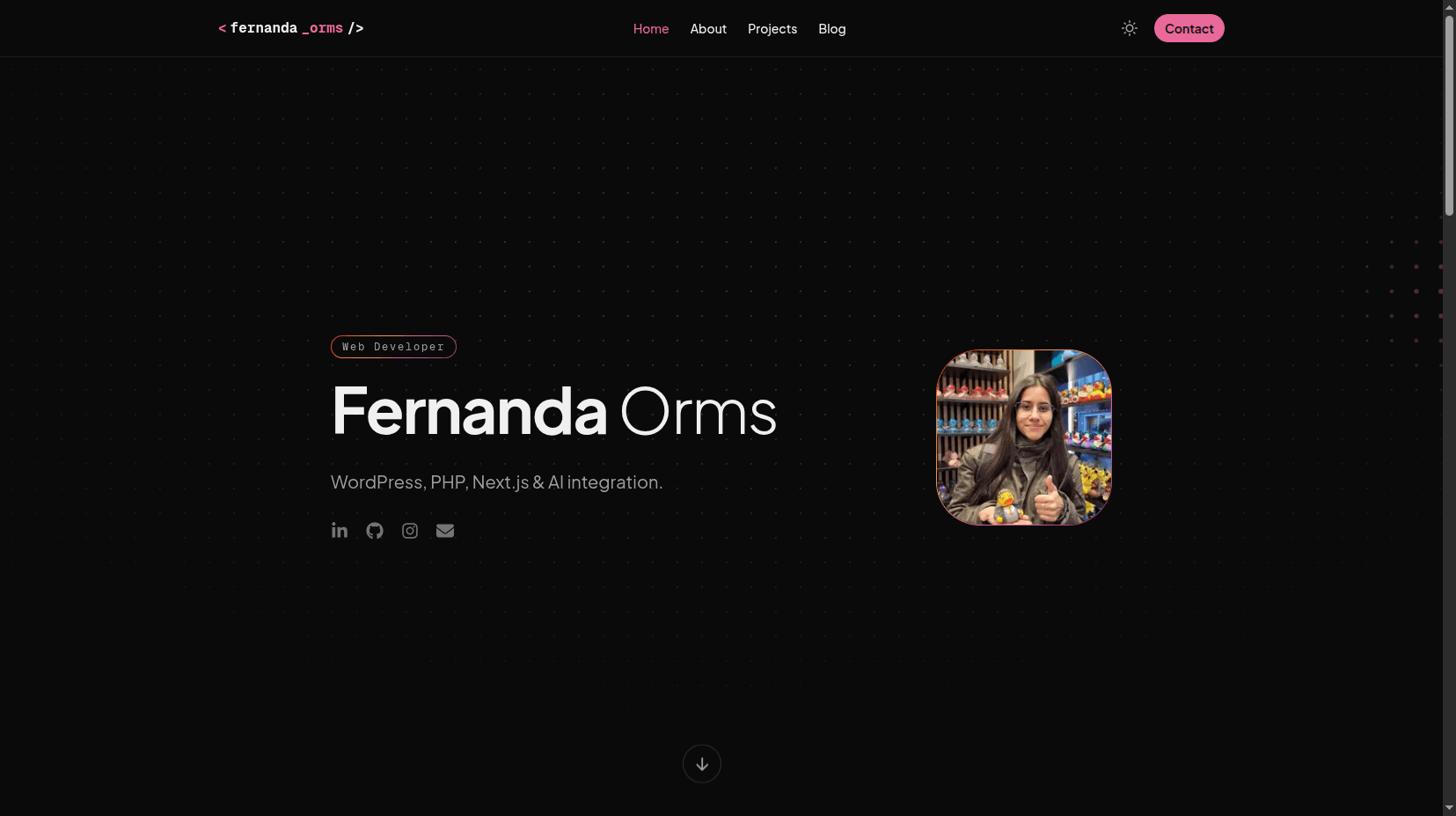
A complete redesign and rebuild of my personal portfolio using Next.js, TypeScript, and Sanity CMS, focused on performance, content management, and long-term scalability.
Overview
As my experience evolved, my previous portfolio no longer reflected the type of work I was doing professionally. I wanted a platform that would better showcase my projects, support long-form content through a blog, and provide a more scalable workflow for managing content.
To achieve this, I redesigned and rebuilt the entire website using a Headless CMS architecture powered by Next.js and Sanity CMS.
The Challenge
The previous version relied on static content and offered limited flexibility for publishing and maintaining content over time. Adding new projects or blog posts required direct code changes, making the workflow less efficient and harder to scale.
The goal was to create a modern portfolio that combined performance, maintainability, and a better content management experience.
Solution
I rebuilt the website using Next.js with the App Router and TypeScript, while adopting Sanity CMS as a headless content management solution.
The new architecture separates content from presentation, allowing projects and blog posts to be managed independently from the frontend. This approach provides a more flexible publishing workflow and creates a solid foundation for future growth.
Key Features
- Headless CMS architecture with Sanity
- Dynamic project and blog management
- SEO-focused page structure and metadata
- Responsive design across devices
- Type-safe development with TypeScript
- Automated deployment through Vercel
Technologies
- Next.js
- TypeScript
- Sanity CMS
- Headless CMS
- Vercel
Results
The rebuild significantly improved the content publishing workflow, making it easier to manage projects and blog posts without code changes.
The new architecture also provides better maintainability, improved performance, and a stronger foundation for sharing technical content and showcasing professional work.